
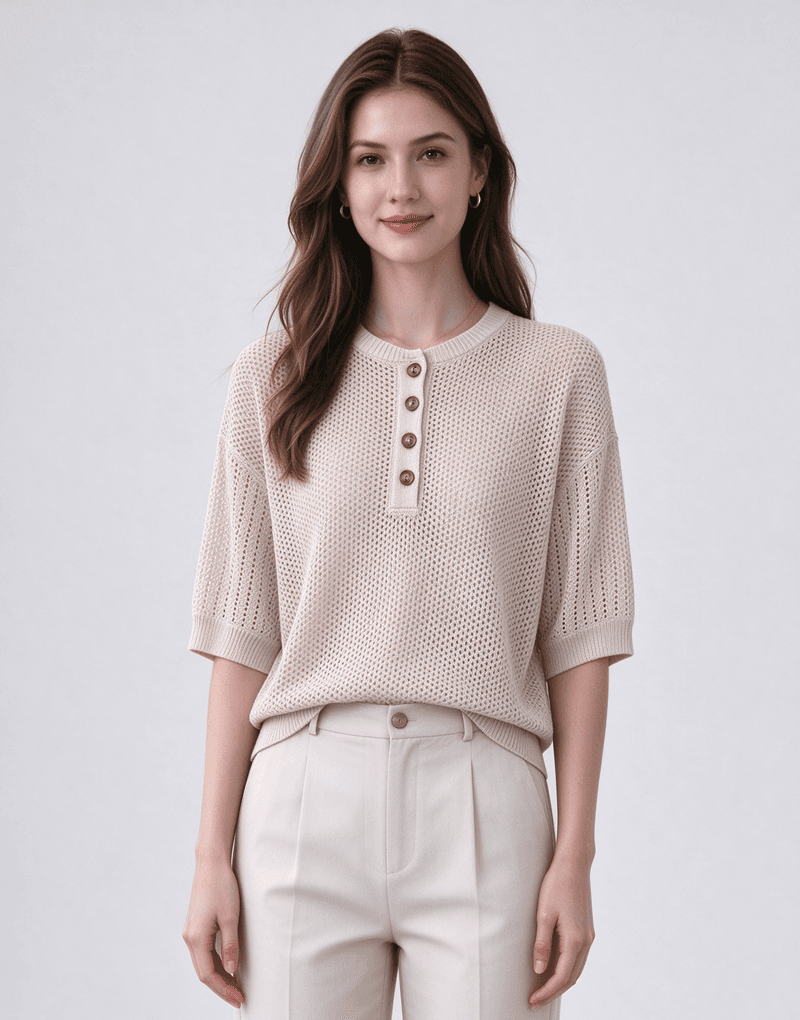
Tencel linen blend summer knitwear has rapidly become a top fabric choice for warm-season apparel.
Why are Tencel (Lyocell) and linen blended knits becoming the top pick for summer outfits?
Linen and Tencel each have their own strengths and weaknesses. When woven together, they offset each other’s flaws and keep the best properties of both fibres, which makes this blend wildly popular for warm-weather knitwear.
Pure Linen
✅ Advantages
- Natural hollow fibre structure, excellent heat dissipation and breathability
- Great moisture wicking, quick-drying, naturally antibacterial
- Distinct raw texture, structural stiffness, premium relaxed look
❌ Disadvantages
- Rough and scratchy against skin, not friendly for close-fitting styles
- Very wrinkly; creases easily after wearing
- Lacks smooth drape, tends to look stiff
Pure Tencel (Lyocell)
✅ Advantages
- Silky, soft, smooth, skin-friendly, no scratchy feeling
- Beautiful fluid drape and gentle lustre
- Better wrinkle resistance than linen
❌ Disadvantages
- Too soft and limp on its own, without enough structure
- Garments lose shape easily, prone to clinging to the body
Tencel & Linen Blend: The Best of Both Worlds
Blending linen and Tencel balances performance perfectly.
Linen brings breathability, cooling effect, natural texture and fabric structure. Tencel softens the harsh linen texture, adds silky drape and reduces wrinkling.
The final fabric stays cool and airy on hot days, wicks sweat fast without sticking to skin. It has a natural organic texture, yet feels smooth enough for next-to-skin wear. It holds its shape better than pure Tencel and is less creasy than pure linen.
hen linen and Tencel are blended together, they combine the best of both worlds. The linen brings outstanding air flow and natural heat dissipation, while Tencel adds silky softness, reducing scratchiness and wrinkles. The blend delivers a relaxed, premium texture without being stiff, and drapes beautifully for lightweight summer knit styles. It is ideal for openwork knits, which you can see in our linen tencel openwork knitwear collection.
What about acrylic? Is acrylic only added to lower the price?
Not exactly, though acrylic is cheaper than linen and Tencel.
Adding acrylic can reduce raw material cost, but it also serves functional purposes:
- Improve shape retention, reduce stretching and deformation after washing
- Boost wrinkle resistance
- Cut down pilling risk
The trade-off: too much acrylic will weaken the natural cool, breathable feel of linen and Tencel. For premium summer knitwear, we keep acrylic content low only for stability, without sacrificing the cool handfeel.
Fabric handfeel is one of the core details brand buyers care about. Our Tencel linen blend can be tuned for different markets. Some clients prefer a more prominent linen rustic touch, while others want an extra silky, smooth surface dominated by Tencel. We test each fabric batch for weight, GSM and airflow before sampling, to make sure the final knit matches your collection standard.
Fabric Care
- Hand wash or gentle machine wash in lukewarm water, use laundry bags
- Mild neutral detergent only, no bleach
- Do not twist hard to avoid deformation and pilling
- Lay flat to dry in shade
- Light iron at low temperature if you want to smooth creases
For care, Tencel linen blend knitwear prefers gentle hand wash or delicate machine cycle with cold water. Avoid high heat drying to preserve fabric texture and shape.
If you are a clothing brand looking for reliable summer knit OEM support, we provide fabric sourcing, sampling and custom knit development for your new seasonal collections.
We support small trial orders for brand style testing. We can adjust the fibre ratio of Tencel, linen and acrylic according to your target price and handfeel requirements. Once the sample is confirmed, we support stable repeat orders with consistent quality.
Contact us to develop your summer knit collection.