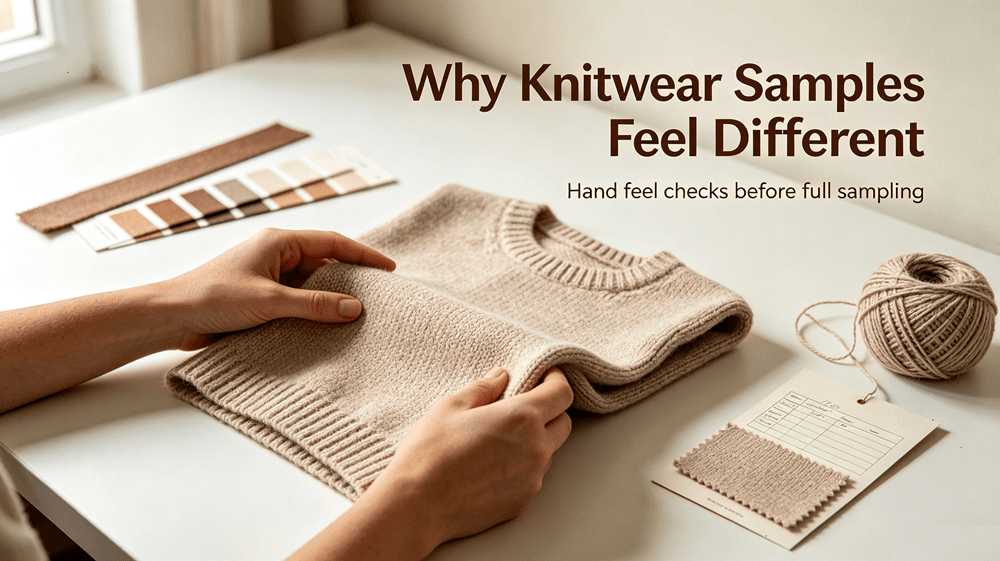
Developing new knitwear styles is always a challenging part of apparel brand planning. While communicating with many apparel brands for knitwear sampling, we have noticed a common pain point. Many designers and buyers confirm yarn composition and yarn count clearly, yet they cannot predict the actual hand feel of the finished sample only from these specifications.
Yarn composition and yarn count are just data on paper.
Even yarn with the same composition and count can deliver completely different hand feel, depending on twist, spinning method and dyeing & finishing process. It is impossible to tell whether the final knit will be soft, crisp or stiff just by reading product specs. This easily pushes many brands into endless rounds of revisions to get a satisfactory sample.
The cost of repeated sampling goes far beyond the fees for proto samples. Every new round involves knitting, sewing and finishing. It also takes plenty of time for cross-border communication, detail checking and sample delivery. These invisible time and energy costs are hard to calculate. The challenge becomes even greater for brand-new styles with no reference samples or original shade cards. Yarn selection, stitch density, texture, colour and shrinkage all need to be checked one by one. A small mismatch means a new sampling round, which delays your brand launch timeline.
Hand feel is highly subjective, and written specifications can never fully describe it.
Every brand has its own vision for how the knitwear should feel against the skin, how it drapes on the body, and how it performs after washing. Some buyers prioritise lightweight coolness for spring and summer collections, while others look for plush, warm textures for autumn and winter lines. These tactile preferences are deeply subjective, and they cannot be fully captured on a spec sheet.
Many design teams rely on past experience with other fabrics, only to find that knit behaves differently from woven fabrics. The same yarn knitted on different gauge machines creates totally different surface feel and stretch. Even small changes in stitch construction can shift the softness, openness and elasticity of the finished knit. This is why so many teams run into surprises once the first sample arrives.
When deadlines for seasonal collection are tight, repeated sampling creates a chain reaction. It pushes back fit reviews, colour approvals, and final production scheduling. For small to mid-sized apparel brands, limited development budgets mean unexpected extra sampling fees can quickly eat into the season’s development budget. It is easy to underestimate how much back-and-forth communication each revision will require across time zones.
With years of experience in knitwear development, we have optimized our sampling workflow to cut unnecessary trial and error. We changed the traditional order that starts with a full knitwear sample directly. Instead, we move hand-feel and colour confirmation to the earliest stage.
Before making a full garment sample, we send free yarn swatches and shade cards for physical confirmation.
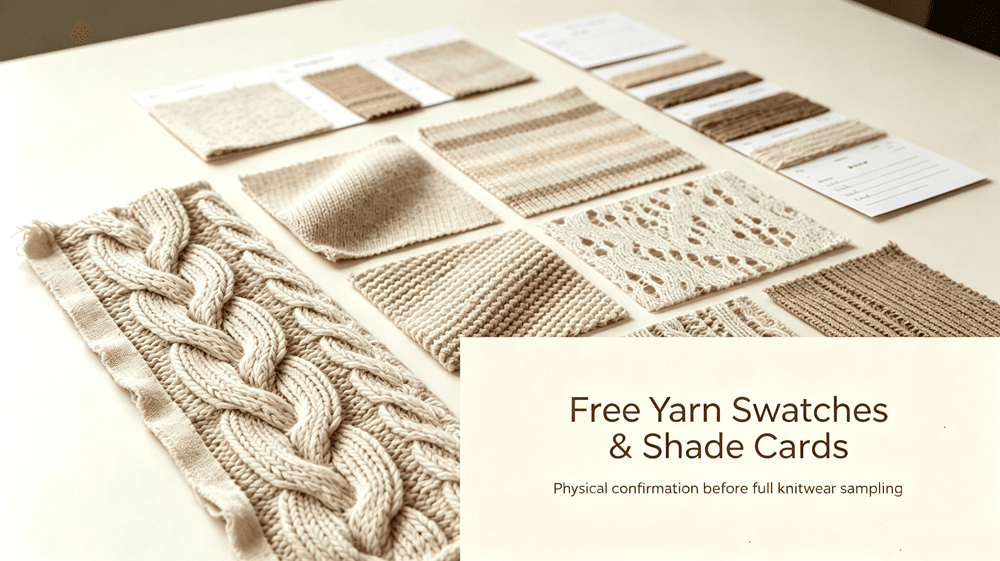
Once we receive your requirements for fabric features and style performance, we will not start knitting the full knitwear sample right away. If you’d like to know more about our knit fabric selection, check our article about linen tencel openwork knitwear. We select several alternative yarn options with similar hand feel according to your needs for softness, drape and breathability. We prepare small yarn swatches together with matching shade cards and send them to you for physical checking. These yarn swatches are free of charge.
You can touch and compare these swatches in person, and lock your preferred yarn and colour based on real texture, instead of imagining the final effect from descriptions. We will only start producing the full knitwear proto sample after you fully approve the yarn swatches and colour references.
This simple workflow adjustment helps brands avoid many development pitfalls. You will not find the hand feel unsatisfying after a whole garment sample is finished. It saves extra sampling costs and shortens your selection cycle significantly. Once hand feel and colour are confirmed at the beginning, the final knitwear sample will match your expectations much better, and the whole communication process becomes smoother.
A reliable sampling process with fewer revisions helps your seasonal collection stay on track.
A reliable sampling process with fewer revisions is the foundation for successful knitwear launch. The mature knit supply chain in Guangdong supports our flexible sampling. Read about Dongguan Dalang knitwear trade center. If you are developing new knit styles and looking for a simpler sampling process with less back-and-forth revision, feel free to share your development plan with us.