Jacquard knit sampling often starts with a simple creative idea. Many clients believe that sharing their design concept alone is enough for the factory to perfectly replicate their vision.
While it’s common to overlook detailed specs at first, most brand owners are happy to collaborate closely with the mill and refine details together once these points are brought up. The clearer you are on your own product requirements, the more smoothly this joint development will go, cutting down repeated sample revisions, extra sampling fees and development delays. Many boutique brands run into these avoidable issues during sampling. Read our guide on common knitwear sampling mistakes to prevent unnecessary revisions.
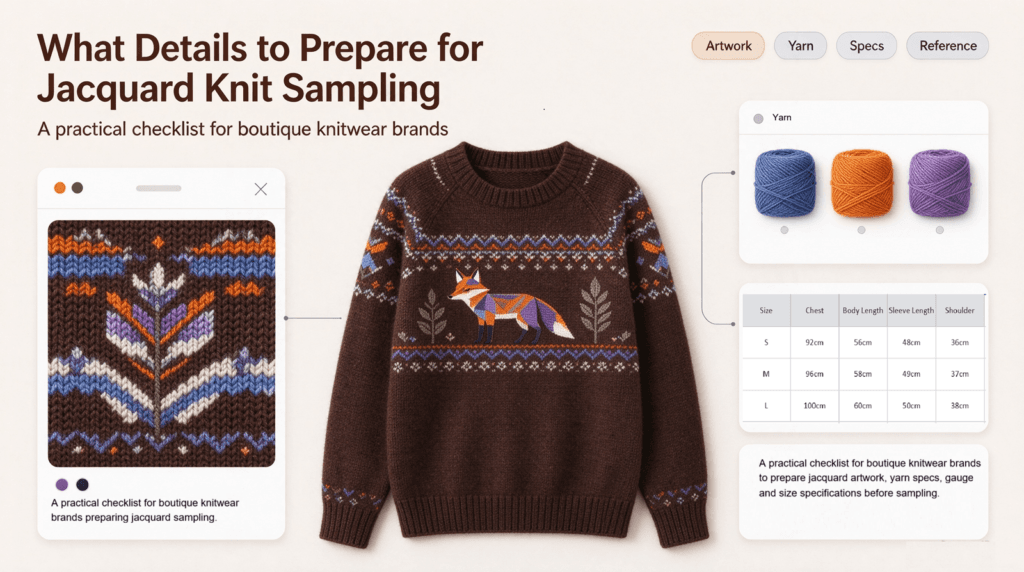
Artwork files are just the starting point for jacquard knitting. Unlike flat print graphics, jacquard patterns are woven directly into knit fabric. Simple image files cannot tell the factory how yarns interlock, stitch density and color transition rules.
Here is the practical checklist boutique knitwear brands need to prepare before jacquard sampling.
1. Pattern Artwork with Technical Specifications
A high-resolution vector PDF or AI file is preferred, not only a JPG preview.
- Mark every color block separately
- Indicate pattern repeat size
- Note whether the pattern runs full garment, chest panel only or cuffs / hem band
- Specify any thin lines or tiny motifs: very small elements may not translate well on knit jacquard and need adjustment
Many brand designers learn this lesson: fine details that look great on screen may disappear or distort after knitted. Early communication helps modify patterns before sampling.
2. Yarn Information
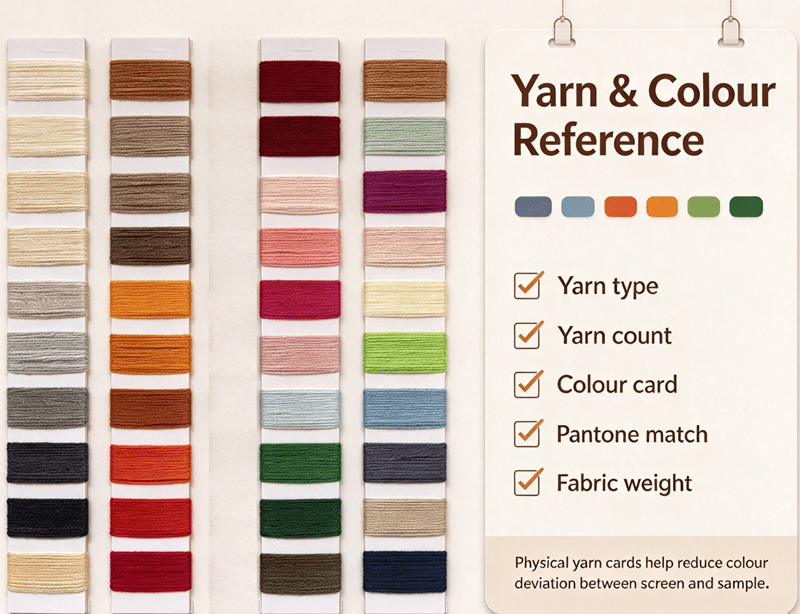
Jacquard performance heavily relies on yarn selection. Prepare these details:
- Fiber composition (Merino wool, wool blend, cotton etc.)
- Yarn count / micron specification
- Color references: Pantone number or physical yarn swatch
- Key requirements: pilling resistance, machine washable treatment, no acrylic. If you are sourcing merino blends without acrylic for your collection, learn more about machine-washable merino wool blends and their fabric limitations.
Different yarn thickness changes the final look of jacquard patterns. Same graphic will show totally different texture when switching from fine merino to bulkier yarn.
3. Garment Measurement & Size Spec Sheet
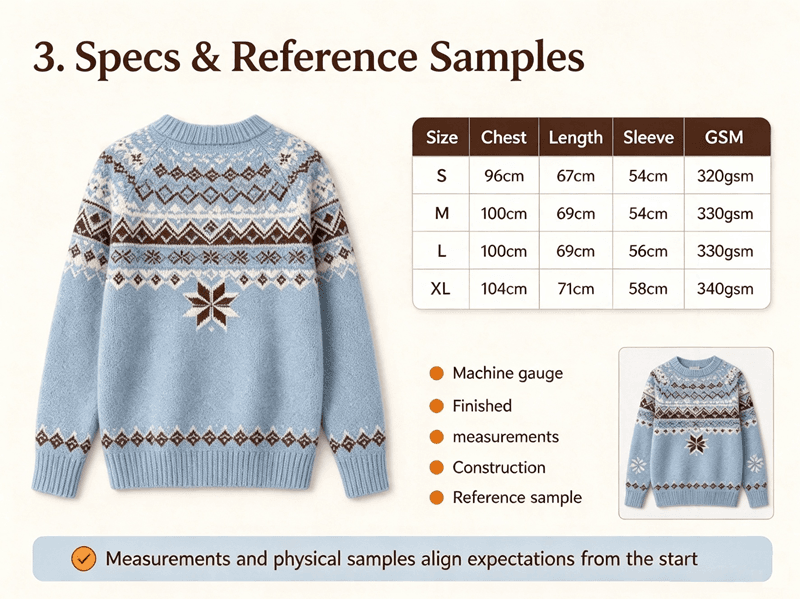
A full spec sheet is required, not just a sketch.
- Full set of body measurements for base size
- Stitch gauge / knit gauge (GG)
- Fit preference: relaxed, tailored, slim fit
- Construction notes: rib collar, hem, cuff structure, seam style
The same jacquard pattern will stretch differently depending on the knit gauge. The gauge defines how dense the stitches are and controls the final fabric weight.
4. Extra Functional & Quality Requirements
Add your mandatory standards upfront:
- Fabric weight
- Care requirements
- Certification needs such as OEKO-TEX if required
- Any limitation on sample cost, sample timeline
5. Reference Samples & Expectations
If you own a physical sweater with jacquard effect similar to your target, send it to the manufacturer. A physical reference helps the mill understand your desired handfeel, stitch tightness and visual effect far better than photos. Also clarify your tolerance level for minor stitch variations, jacquard is not a printed graphic.
Common Pitfall to Avoid
Do not assume the factory can guess your vision. Jacquard patterns are programmed stitch by stitch. Ambiguous details will result in samples that look different from what you imagined, and multiple rounds of revision will extend your development timeline.
Final Thought
Preparing this full set of information upfront helps your knitwear manufacturer produce a closer sample on the first try, saving your budget and development time. Jacquard knit sampling is a collaborative journey. When both sides align on specifications from the start, you turn creative ideas into physical knitwear with less friction.
Taking time to compile all these specifications before jacquard knit sampling also helps set clear expectations on lead time and sampling cost. It removes guesswork for both sides and builds trust between boutique brands and knit manufacturers.
If you are developing jacquard knit styles and want to review your specification checklist before sampling, feel free to get in touch.
FAQ
Q: Can I only send a picture reference for jacquard design?
A: Reference photos are helpful for mood, but vector artwork with separated color layers is necessary to program the jacquard machine. A picture alone cannot be directly converted to knitting codes.
Q: Will small decorative patterns work on jacquard knit?
A: It depends on yarn thickness and machine gauge. Very tiny motifs often need simplification. Your knit manufacturer will advise feasible adjustments before sampling.
Q: How long does jacquard sampling usually take?
A: The timeline depends on pattern complexity, yarn lead time and machine programming. Complex multi-color jacquard normally needs longer development time than basic solid knit styles.