

If you’re developing a new knitwear collection for your boutique, knit fabric swatch sourcing is likely one of your biggest challenges. You’ve probably wanted to test multiple knit fabric options side by side.
Some boutique brand owners ask us to source a wide range of knit fabric swatches with different fiber compositions. The goal is simple: compare handfeel, drape and visual effects, then pick the best fabric for their line.
We fully support this development method. Testing multiple materials is a smart way to refine your design, and our team always tries our best to source as many matching swatches as possible.
That said, there are two industry realities that often surprise boutique buyers when sourcing reference fabrics.
Two Key Reasons You Cannot Always Source Exact Reference Fabrics
1. Big brand exclusive fabrics are protected by NDA agreements
A lot of trending reference fabrics our clients share are custom-developed for well-known apparel brands.
These custom knit materials are covered under strict non-disclosure agreements between brands and fabric mills. Mills are not allowed to publish the fabric specs, composition details, or sell this exact fabric to other buyers. That’s why you will never find these exclusive fabrics listed on B2B sourcing websites — even when you have the composition information from a retail garment label.
2. Most fabric mills do not stock every specialty knit material
Off-the-shelf, commonly used knit fabrics are kept in stock for quick sampling. However, niche, less popular knit blends are only produced upon order. Fabric mills won’t keep large inventory for low-demand specialty fabrics. Even without any NDA restrictions, these rare materials require custom production, which adds extra lead time for swatch development.
It is common for buyers to feel confused: the composition printed on the garment tag looks straightforward, yet the identical knit fabric cannot be found anywhere. This is not a sourcing failure, but a normal limitation within the knitwear supply chain.
Practical tips for your knit fabric sourcing
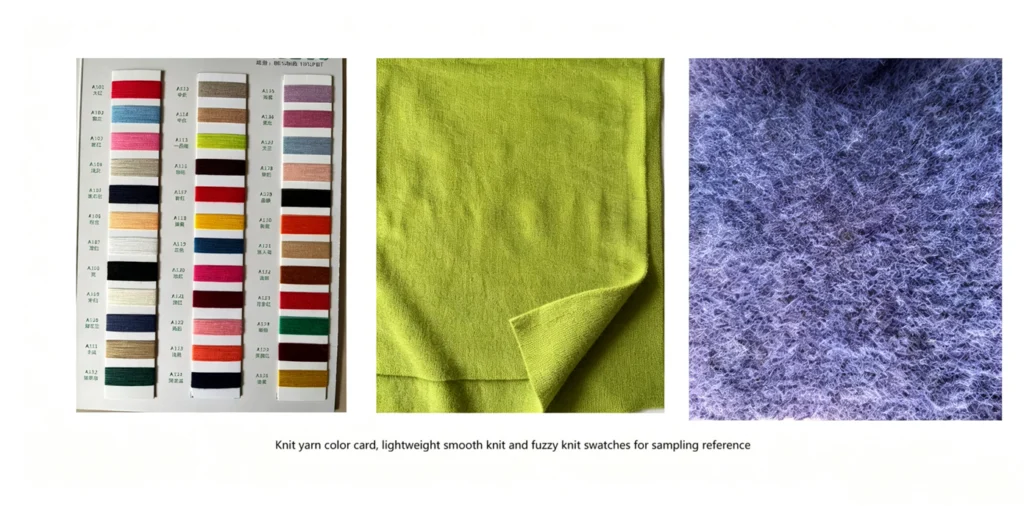
Knit fabric swatch sourcing becomes much easier when you focus on matching physical properties rather than exact composition labels.
Instead of chasing an exact copy of a confidential branded fabric, we focus on matching the fabric’s core physical properties.
1. Prioritize handfeel, weight and drape over fiber composition alone The same fiber blend can create completely different knit texture. Yarn twist, needle gauge and post-finishing treatments all change the final feel. Focus on the tactile result you want, rather than only copying the ingredient percentage from a reference label.
2. Start with 2–3 closest swatch options first We suggest narrowing your target feel before requesting a large batch of swatches. We source the closest comparable samples for you to test. This helps you save sampling time and cut your fabric swatch cost.
3. Send a small fabric snippet or reference garment whenever possible A tiny piece of the reference fabric is far more helpful than only a composition sheet. We can evaluate stitch density, softness and stretch, then work with mills to locate the nearest available match.
4. Accept minor adjustments to yarn blends for similar performance When the original reference fabric is locked under NDA, we can adjust yarn formulas to replicate your target handfeel. All new swatches will be sent to you for confirmation before formal sampling begins.
Closing Thought
We are ready to help you explore fabric options during your knitwear product development.
We cannot source NDA-protected exclusive brand fabrics, nor instantly get hard-to-stock specialty materials. But we will work with you to source comparable knit fabrics that deliver the look and handfeel you want for your boutique knit collection.
FAQ
Q: Can you source the exact knit fabric used by famous clothing brands? A: Most custom brand fabrics are protected by NDA. We cannot get the identical material, but we can source comparable swatches to match your target handfeel and weight.
Q: Is a fabric cutting better than just sharing composition data? A: Yes. A physical fabric snippet lets us assess handfeel and stretch, details that composition numbers alone cannot show.
Q: Why does sourcing some specialty knit swatches take longer? A: Many niche knit fabrics are not stocked by mills. They need custom production, which adds lead time even without NDA restrictions.